
I Assumed BBP Training Was Just a Formality — Then I Had a Needlestick
Aug 04, 2026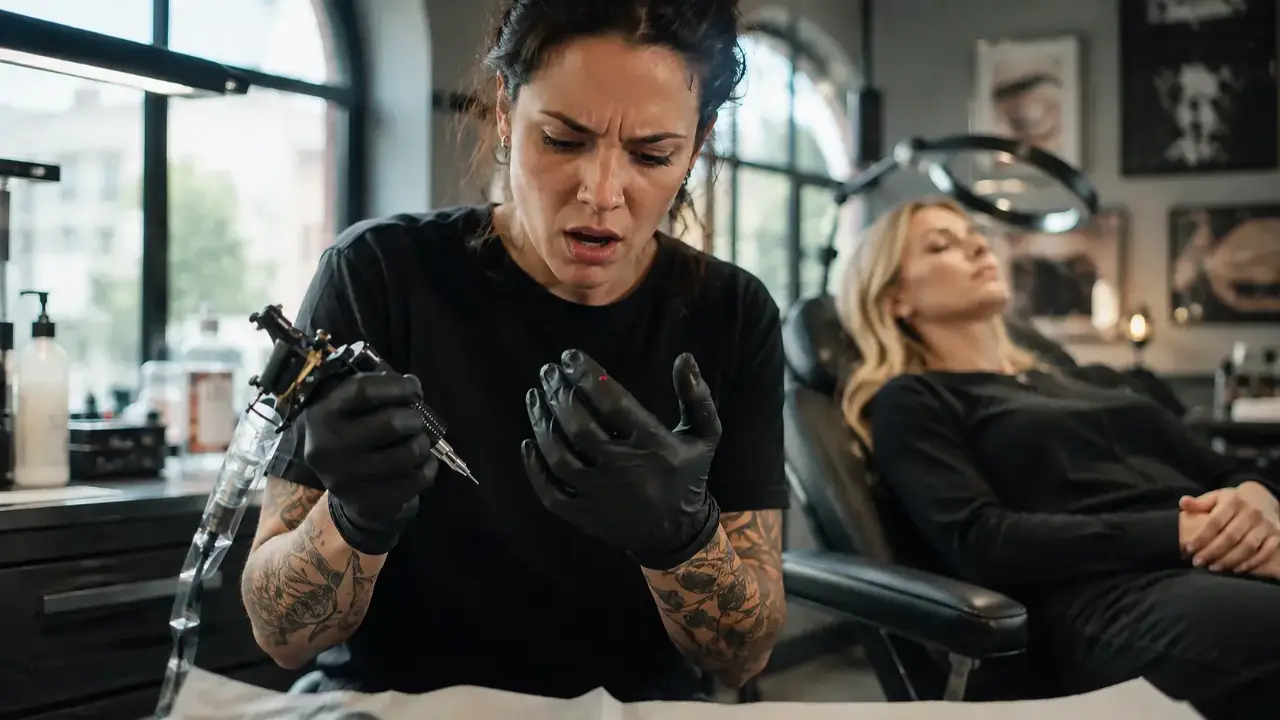
Eleven years into tattooing, I had completed bloodborne pathogen training four times. I knew the handouts. I had checked the boxes, collected the certificates, filed them in the binder my old shop kept by the exit sign. I believed — genuinely believed — that I understood the risks, that I was careful enough, and that the training was mostly a legal formality designed to generate paperwork. Then, on a busy Friday afternoon in October, I found out exactly how wrong that belief was when I experienced a needlestick injury that changed everything I thought I knew about working with bloodborne pathogens.
This is not a horror story. Everyone is fine. But the weeks that followed the incident showed me the gap between what I thought needlestick injury protocol meant for tattoo artists and what the protocol actually demands — and why that gap matters more than most of us want to admit.
The Moment Everything Changed
It was a geometric piece, upper arm, relatively straightforward. My client shifted unexpectedly. I was repositioning, my hand moved at the same moment, and a needle made contact with my finger — not a deep puncture, but contact. A small amount of blood from the needle.
My first reaction was embarrassment. Which is, I now understand, a completely useless first reaction.
My second reaction was to think: I've had worse paper cuts. Which is also useless and dangerous.
What happened in the next few minutes set the tone for everything that followed. I did what I knew — rinsed the site under running water, applied antiseptic — and then I paused. Because after those two steps, my mental script went blank. I had completed four rounds of BBP training and I could not remember, clearly and with confidence, what the next steps were supposed to be.
That blank is the thing I want to talk about. Because I suspect I am not the only one who has had it.
The Immediate Protocol — What the First 30 Minutes Look Like
The exposure control plan your studio is required to have on file under the OSHA Bloodborne Pathogens Standard (29 CFR 1910.1030) contains a section on post-exposure procedures. If you have never actually read it — not skimmed it, but read it — this is the part that matters.
The immediate steps after a needlestick or other bloodborne pathogen exposure incident are:
Flush and clean. For a needlestick or cut, wash the site thoroughly with soap and water. For a splash to eyes, nose, or mouth, flush with clean water. This is not the moment for a bandage or a quick rinse — it means thorough flushing.
Remove yourself from the client interaction. This is the step I fumbled. I stayed in the room. I apologized to my client, finished explaining what had happened, and spent three minutes managing the awkwardness before I actually stepped away. Those three minutes did nothing useful. Your protocol should be clear that once an exposure occurs, you hand off or pause and step out immediately.
Notify the designated person. Every shop with more than one employee needs a designated person responsible for managing exposure incidents. If you own a solo studio, that person is you, and you need to have already identified what medical facility you will contact. The exposure needs to be documented immediately — date, time, type of exposure, the instrument involved, information about the source individual.
Seek medical evaluation without delay. Post-exposure prophylaxis (PEP) for HIV, if indicated, must begin within 72 hours of exposure to have maximum effectiveness — and the sooner, the better. Hepatitis B post-exposure management also has time-sensitive components depending on your vaccination status. "I'll go to the doctor when I have a break in the schedule" is not a protocol. It is a risk.
On the Friday this happened to me, I was at an urgent care clinic within 45 minutes of the incident. I know artists who have waited days. But the medical evaluation is not optional, and it is not something you can schedule for later in the week.
The Testing Period Nobody Talks About
The part of bloodborne pathogen exposure nobody warned me about is the waiting. The medical evaluation initiated baseline testing for HIV, hepatitis B, and hepatitis C. Then follow-up testing at six weeks, three months, and six months. Standard protocol.
The baseline tests came back negative. The follow-up tests came back negative. Everything was fine, medically speaking.
But the period between those results is not nothing. Six months of intermittent awareness that you experienced a potential exposure, that you are waiting on results, that the question is technically open. That combination — knowing and waiting and not talking — is its own kind of weight.
When BBP training covers the emotional dimensions of a post-exposure incident, artists who have never had one tend to tune it out. It reads as filler content between the science slides. Having been through the testing period, I can confirm that the emotional component of a bloodborne pathogen exposure incident is not filler. It is part of what the experience actually costs.
What I Wish My BBP Training Had Made Clearer
The exposure control plan is not just a document to have. Every training mentions the Exposure Control Plan. What training did not impress on me was that I personally needed to know what it said and where it was kept. After the incident, I discovered that our plan had not been updated in over two years and the "designated post-exposure contact" listed no longer worked at the shop. In a real emergency, that plan would have been nearly useless.
"Universal precautions" means all blood and body fluids, all the time, without exception. Clients do not disclose their status. Clients sometimes do not know their status. The needle that contacted my finger had been in contact with a client I had known for years, whose health history I thought I knew. None of that changes the protocol.
The "it won't happen to me" assumption is a technical error. Needlestick injuries in professional tattooing and body piercing are underreported and more common than published data suggests. Experience doesn't reduce the risk as much as we tell ourselves it does.
How a Needlestick Changes the Way You Think About Every Client
What changed is that the gap in my mental script is now filled. I know exactly what my exposure control plan says. I know where it is. I know the contact number for the urgent care clinic I've identified for post-exposure evaluation. I know that the six-week follow-up test exists and when I would need to schedule it.
More practically: I reviewed how I position my hands during repositioning and found two or three moments in a typical session where I was moving with more speed and less deliberateness than the situation warranted.
None of this required becoming afraid of my work. It required becoming honest about the places where my habits had drifted from the standards my training described.
That honesty is what good BBP training is trying to produce — not compliance with a certificate requirement, but a practitioner who actually thinks through what they would do in the first 30 minutes after an exposure before the exposure happens.
Completing a solid California BBP certification at elitebbptraining.com takes about two hours. The content covers post-exposure procedure in a way that is meant to stick. After eleven years and one incident, I understand the difference between training that sticks and training that doesn't.
Frequently Asked Questions
Q: What do I do in the first five minutes after a needlestick injury at my tattoo studio?
Immediately stop the work, flush the site thoroughly with soap and water for several minutes, and step away from the client interaction. Document the exposure with date, time, and circumstances, and seek medical evaluation immediately — do not wait until after your shift.
Q: Do I have to tell my client I had a needlestick involving their blood?
Yes, typically. Your exposure control plan should address source individual notification. Medical personnel evaluating your post-exposure situation may also need consent to test the source individual for relevant bloodborne pathogens.
Q: How long does post-exposure testing last?
Standard follow-up testing for HIV typically occurs at baseline, six weeks, three months, and six months post-exposure. Hepatitis B and C follow-up schedules depend on your vaccination status and other factors your doctor will assess.
Q: What is PEP and when does it apply?
Post-exposure prophylaxis (PEP) is a course of antiretroviral medication that can significantly reduce the risk of HIV transmission after a potential exposure. It must be started within 72 hours of the exposure — ideally within hours — and is taken daily for 28 days.
Q: Is a needlestick in tattooing considered a formal workplace injury?
Yes. Under OSHA regulations, a needlestick that results in actual or potential exposure to bloodborne pathogens is a recordable incident and must be documented in your facility's exposure incident log.
Get your BBP certification online — 100% online, 2-hour course, same-day certificate accepted in 25+ California counties. Enroll in Elite BBP Training today and stay compliant.
